|
BOAC - Operation of an Airline
This set of photos is a recent acquisition. Geoff Hall found these as a single film strip and obviously they were meant to be used as a slide show presentation. I have scanned these as best as I could, after a bit of cleaning, but the colours have obviously faded over time and there is a lot of dirt and/or damage still on the various images. These were half-frame 35mm positive images and no doubt were copied from another, larger, positive film format. Another issue is that I do not have the description for any of these images, but we can infer a lot from what is on the slides and how they are sequenced. Because of this, the captions are mine and may not be totally correct.

Photo collection J. Hieminga via G. Hall |

Photo collection J. Hieminga via G. Hall |

Photo collection J. Hieminga via G. Hall |

Photo collection J. Hieminga via G. Hall |
1-2. Title slide.
3. BOAC route map. I do not know what year but most likely mid 60s.
4. Empire Air Terminal next to Victoria Station. This was the starting point of your journey.
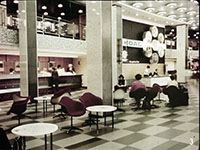
Photo collection J. Hieminga via G. Hall |

Photo collection J. Hieminga via G. Hall |
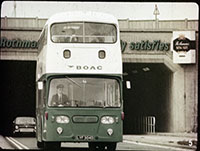
Photo collection J. Hieminga via G. Hall |

Photo collection J. Hieminga via G. Hall |
1. Interior of the air terminal. Passengers checked in here and were looked after until delivered to their destination by airliner.
2-3. Passengers and luggage were moved to London Airport by special coaches.
4. The coach would deliver you to the terminal building at London Airport, where you had only minimal formalities left to go through.

Photo collection J. Hieminga via G. Hall |

Photo collection J. Hieminga via G. Hall |
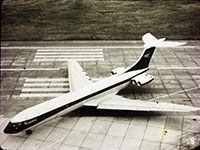
Photo collection J. Hieminga via G. Hall |

Photo collection J. Hieminga via G. Hall |
1. Waiting area inside the terminal building. The Union Jack styled VC10 advertisement in the back is a new one for me.
2-4. VC10s and 707s would be waiting outside to carry you to your destination.

Photo collection J. Hieminga via G. Hall |

Photo collection J. Hieminga via G. Hall |

Photo collection J. Hieminga via G. Hall |
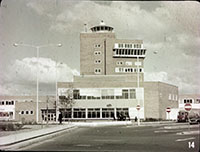
Photo collection J. Hieminga via G. Hall |
1. The crew during preparation, most likely being briefed on the expected weather along the route and at the destination.
2. A covered walkway delivered you right next to the airliner.
3. The Queen's building in the central area of London Airport.
4. The 1960s control tower at London Airport.
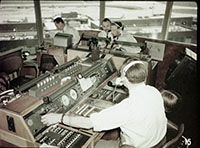
Photo collection J. Hieminga via G. Hall |
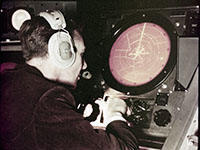
Photo collection J. Hieminga via G. Hall |

Photo collection J. Hieminga via G. Hall |

Photo collection J. Hieminga via G. Hall |
1. From this tower, the controllers directed traffic around the airport, clearing airliners for landings and departures.
2. A separate room was used for the approach and departure controllers, who used modern radar screens to guide traffic.
3. A VC10 taking off for a distant destination.
4. Lovely photo of a VC10 over the UK coastline.
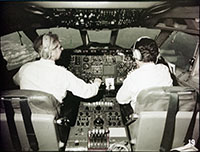
Photo collection J. Hieminga via G. Hall |

Photo collection J. Hieminga via G. Hall |
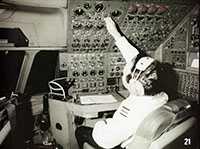
Photo collection J. Hieminga via G. Hall |

Photo collection J. Hieminga via G. Hall |
1. The crew of the VC10 at work during cruise. The captain and first officer managed the flight and kept in touch with the controllers.
2. Behind them, on the left side of the flight deck, the navigator kept track of the airliner's position.
3. On the right side, the E/O or Flight Engineer managed all the systems and the engines of the VC10.
4. In the meantime, the passengers were served their meals.

Photo collection J. Hieminga via G. Hall |
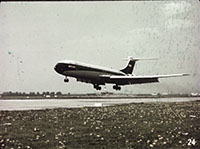
Photo collection J. Hieminga via G. Hall |

Photo collection J. Hieminga via G. Hall |

Photo collection J. Hieminga via G. Hall |
1. These were prepared by the cabin crew in the VC10's galleys.
2. A VC10 landing at an unknown destination.
3. BOAC's maintenance headquarters, now the TBA building, on the east side of London Airport.
4. After a set number of flying hours, every VC10 was inspected in detail and any defects were rectified.

Photo collection J. Hieminga via G. Hall |
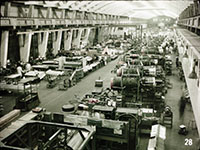
Photo collection J. Hieminga via G. Hall |
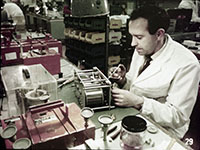
Photo collection J. Hieminga via G. Hall |

Photo collection J. Hieminga via G. Hall |
1. Engineers inspecting the two Conway engines on a VC10.
2. If an engine had to be changed, it was sent to the engine shop for a major overhaul.
3. A separate department looked after the delicate components that drove navigation instruments and recorded flight data.
4. After completion of maintenance, a VC10's engines are tested on the detuners.

Photo collection J. Hieminga via G. Hall |
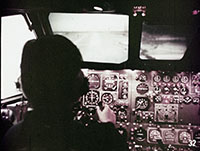
Photo collection J. Hieminga via G. Hall |

Photo collection J. Hieminga via G. Hall |

Photo collection J. Hieminga via G. Hall |
1. Flight crew is regularly trained on the dedicated VC10 simulator. Most of the simulated flying is done on instruments.
2. A camera system displays a view of the miniature runway, allowing the crew to land the simulated airliner.
3. Cabin crew training is done in special mock-up cabin sections. In this case, a service for a flight to Japan is demonstrated.
4. All the meals for the flights are prepared in BOAC's kitchen by a dedicated staff.
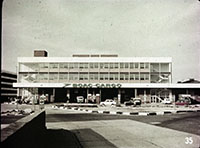
Photo collection J. Hieminga via G. Hall |

Photo collection J. Hieminga via G. Hall |
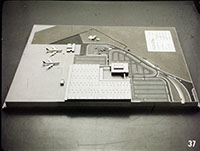
Photo collection J. Hieminga via G. Hall |

Photo collection J. Hieminga via G. Hall |
1. BOAC does not just carry passengers, they also carry a lot of cargo.
2. Dedicated 707 freighters are used to carry special containers full of cargo on various routes.
3. This model appears to show a terminal or cargo building, but I do not know what development is shown here.
4. The airline's operation is overseen by a central planning department.
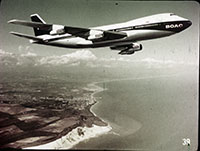
Photo collection J. Hieminga via G. Hall |

Photo collection J. Hieminga via G. Hall |

Photo collection J. Hieminga via G. Hall |
|
1. This slide show was produced when the Boeing 747 was still on order. This impression shows how the large airliner would look once in BOAC service.
2. A similar impression was created for Concorde, but this model would never fly in BOAC colours.
3. Closing slide.
Back to top
| 


